

Parents renew on what their children finish. Daily lesson completion went from 56% to 82%, on a quarter of the build time.
Role
Interaction designer — research, game UX, prototypes
Time
Oct 2020 – Dec 2021 · two phases
Team
3 designers · 3 illustrators · 4 engineers · 2 PMs · 2 educators
Context
The Product and the Industry
The product
ABC Mouse China teaches three-to-eight-year-olds through a short video and the games that follow it. It started in English, passed three million users, and by 2021 covered maths reasoning, coding and Chinese — a lesson for every day of the year. Lockdown pushed school onto tablets in 2020 and made online education one of the fastest-growing categories in China.

Phase 1 · 2020
Tencent built the app. The ABC Mouse team in the US wrote the syllabus and the games inside it.
Phase 2 · 2021
The Tencent team owned all of it: syllabus, games and app.My role
What I Owned, Stage by Stage
Interaction designer
Fourteen months, across the two phases below.
Phase 1 · 2020
Competitive read
→
Design direction
→
Game UX
→
Usability test
Phase 2 · 2021
New workflow
→
User research
→
Cost framework
→
Game design
→
Design QA

The problem
Where the Lesson Lost Them
54%parent satisfaction
60%child satisfaction
30families tested
Why it matters
A parent who watches a child finish the week signs up for the next course, so completion decides renewal.
What testing showed
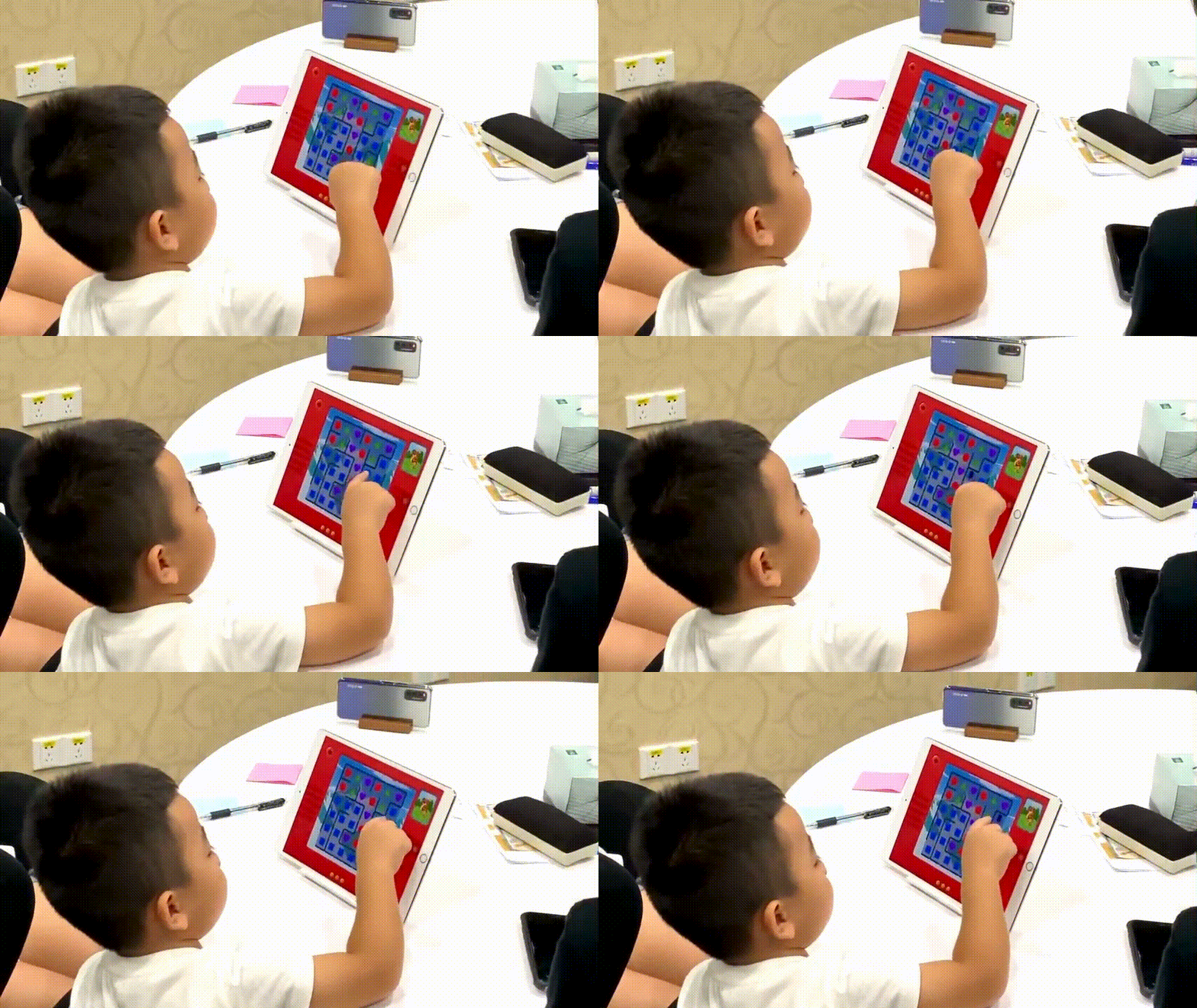
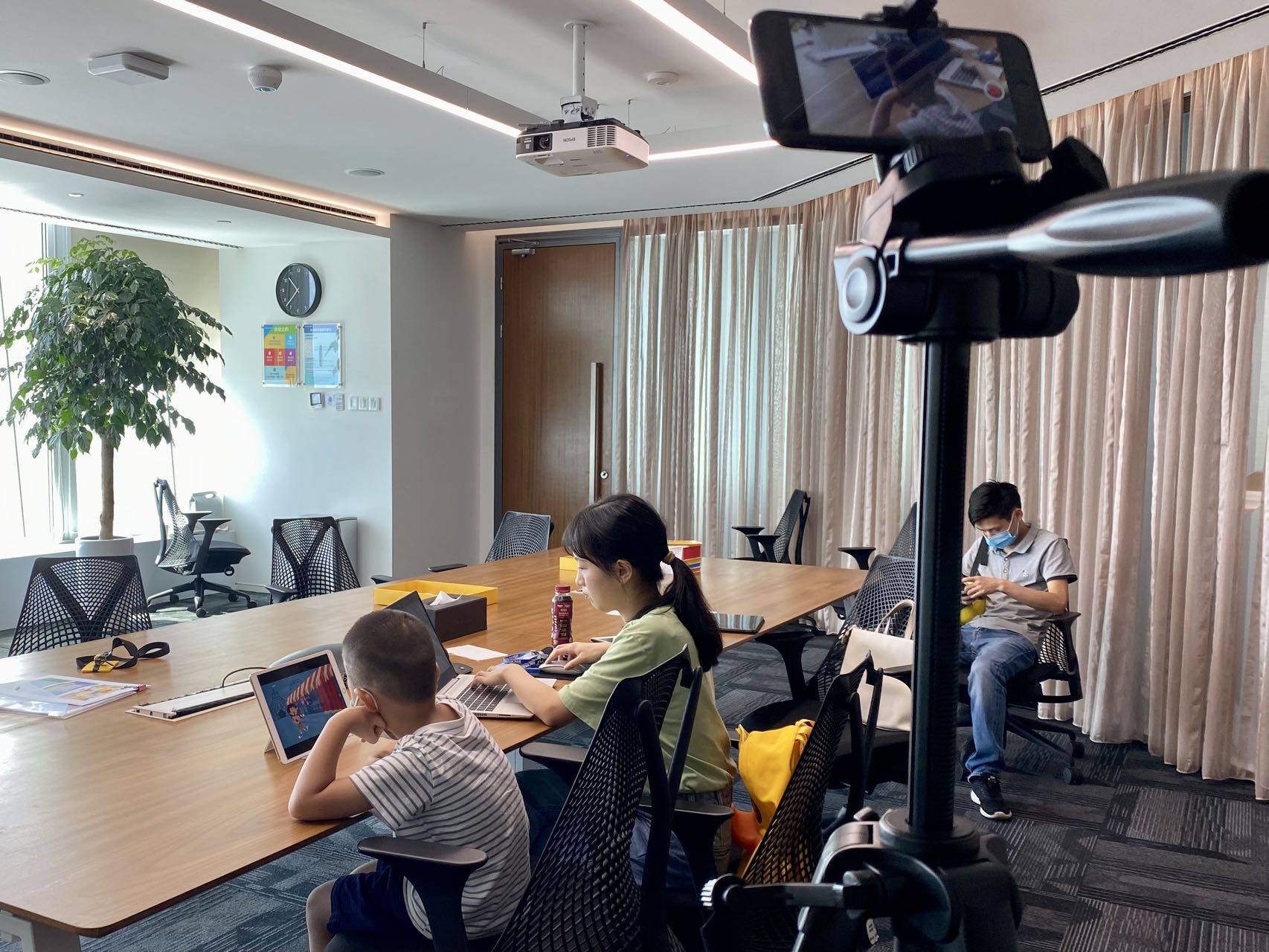
We ran the current build with thirty families and read it against the games children already choose. They stopped in the same three places.
01
Rules to guess
A game opened without telling a child what it wanted.
02
Feedback that came late
Right or wrong, the screen often gave nothing back in time.
03
No room for a mistake
One wrong answer cleared the whole round.
Users
Four Stakeholders, Two Kinds of Player
Who has a stake
An education app answers to more people than the one holding the tablet. Every game had to satisfy four groups at once, and they pull in different directions.

Children
Something worth staying in

Parents
Proof the screen time paid off

Teaching team
The curriculum taught faithfully
Product team
Lower cost per lesson, higher sales

My seat was the trade-off between them — enough play to hold a child, enough progress for a parent to see, the curriculum intact, at a cost the team could repeat every week.
Who is playing
Child development and player-motivation research kept landing on the same split, and store-floor interviews matched it: a child under six plays to find out, a child over six plays to win — and the parent paying for both wants that screen time to teach something.

Ages 3 – 5
The explorer
Piaget · preoperational
“I want to see what happens if I click here.”
—Acts on impulse, reads pictures before words
—Wants surprise more than a score
—Loses the thread in a long session
Short rounds, a changeable scene, feedback that rewards the tap itself.

Ages 6 – 8
The achiever
Piaget · concrete operational
“I want to do well and earn the reward.”
—Plays towards a goal worth winning
—Reads points and badges as proof
—Takes a hard failure personally
Visible goals, scores that add up, and a gentle way to lose a round.

Parents
The buyer
Decides the renewal
“I want my child to learn while playing.”
—Buys learning, tolerates screen time
—Has no time to sit through the lesson
—Judges the course by what the child finishes
Progress they can see at a glance, and a session that ends on time.
Design · Better
Two Steps: Make It Work, Then Make It Chosen
Step 01 · Fix the experience
What the research asked for
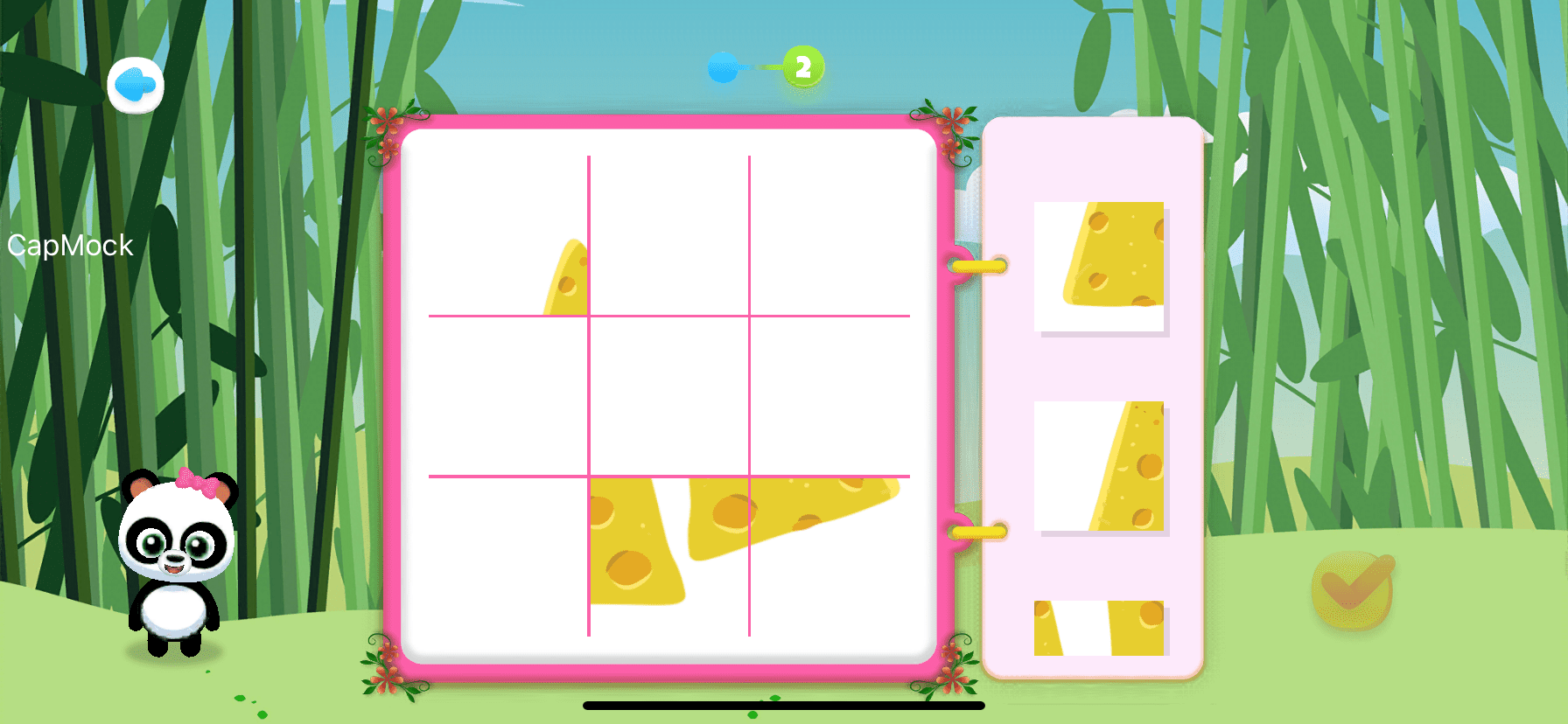
The three places children stopped turned into three levers. Process answers the rules and the mistakes, interface answers what a child can see, and play answers why they keep going.
01Process
Shorter set-up, onboarding sized to the difficulty, and a help button within reach on every screen.
Before

→
After
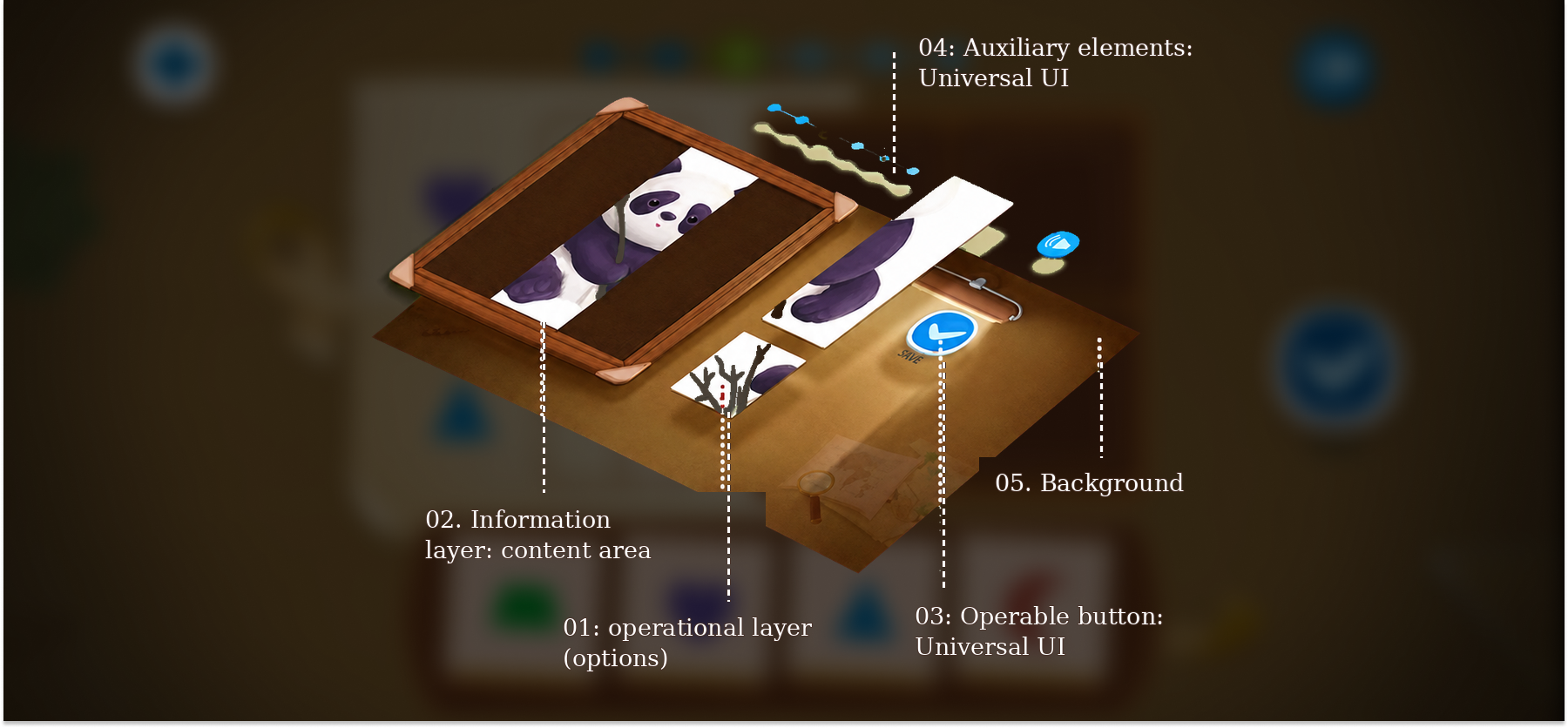
02Interface
Five fixed layers, so a child can tell at a glance what is content and what is tappable.
Before
→
After
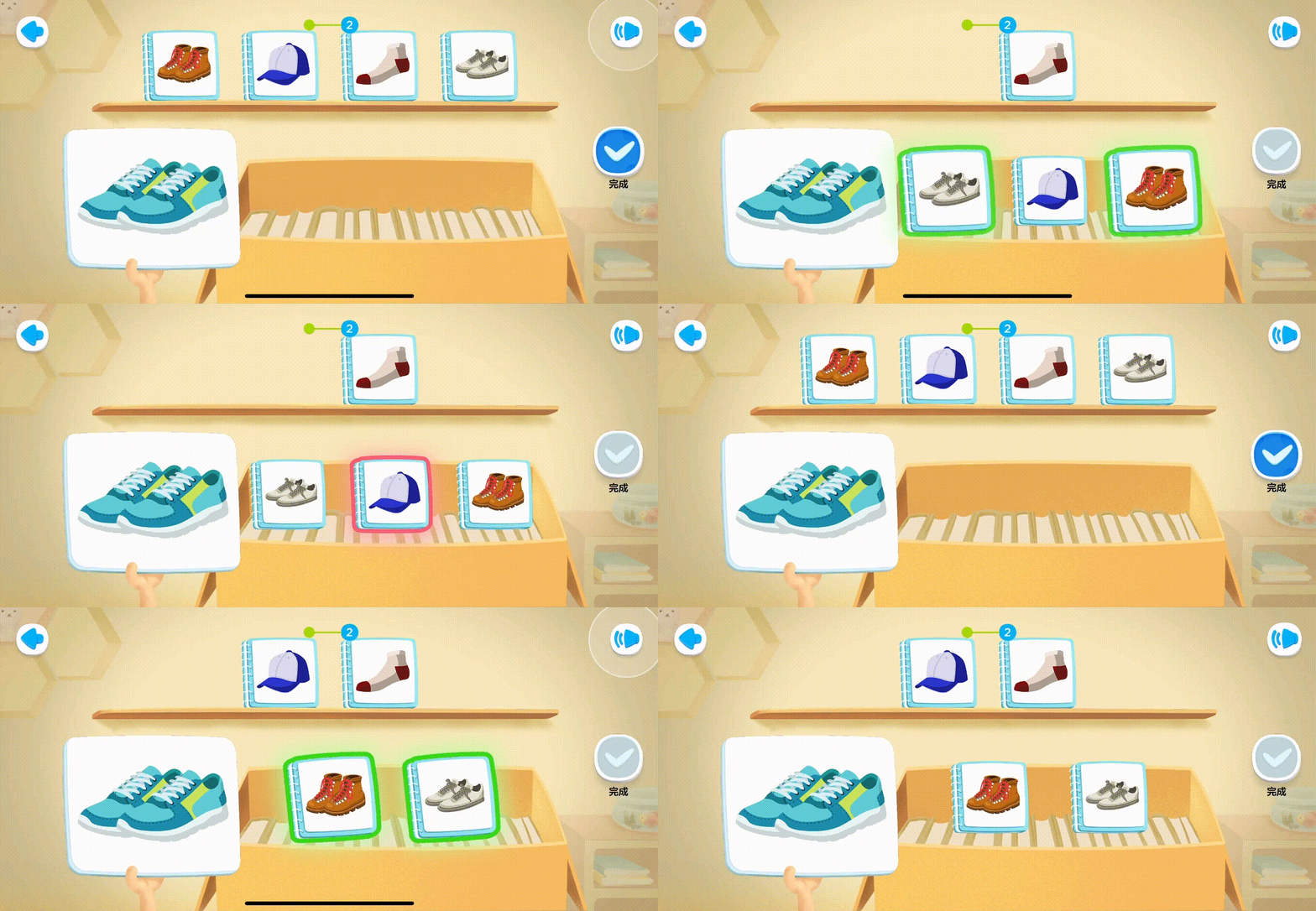
03Gamification
Real-life scenes and a story arc, positioned against the games children already choose.
Before

→
After
From fixes to a standard
Fixing one game teaches little about the next forty, so I audited the whole catalogue and wrote the findings into a design standard — rules for flow, layout, feedback and difficulty, each with worked examples. Every game built afterwards started from it, in both phases.
Step 02 · Define the edge
From a better experience to a stronger position
Fixing what was broken was the baseline. The harder question was where ABC Mouse could build a real advantage in a crowded market, so I mapped the leading children's learning products on three dimensions: systematic curriculum, child-led exploration, and whole-child development.
Category positioning
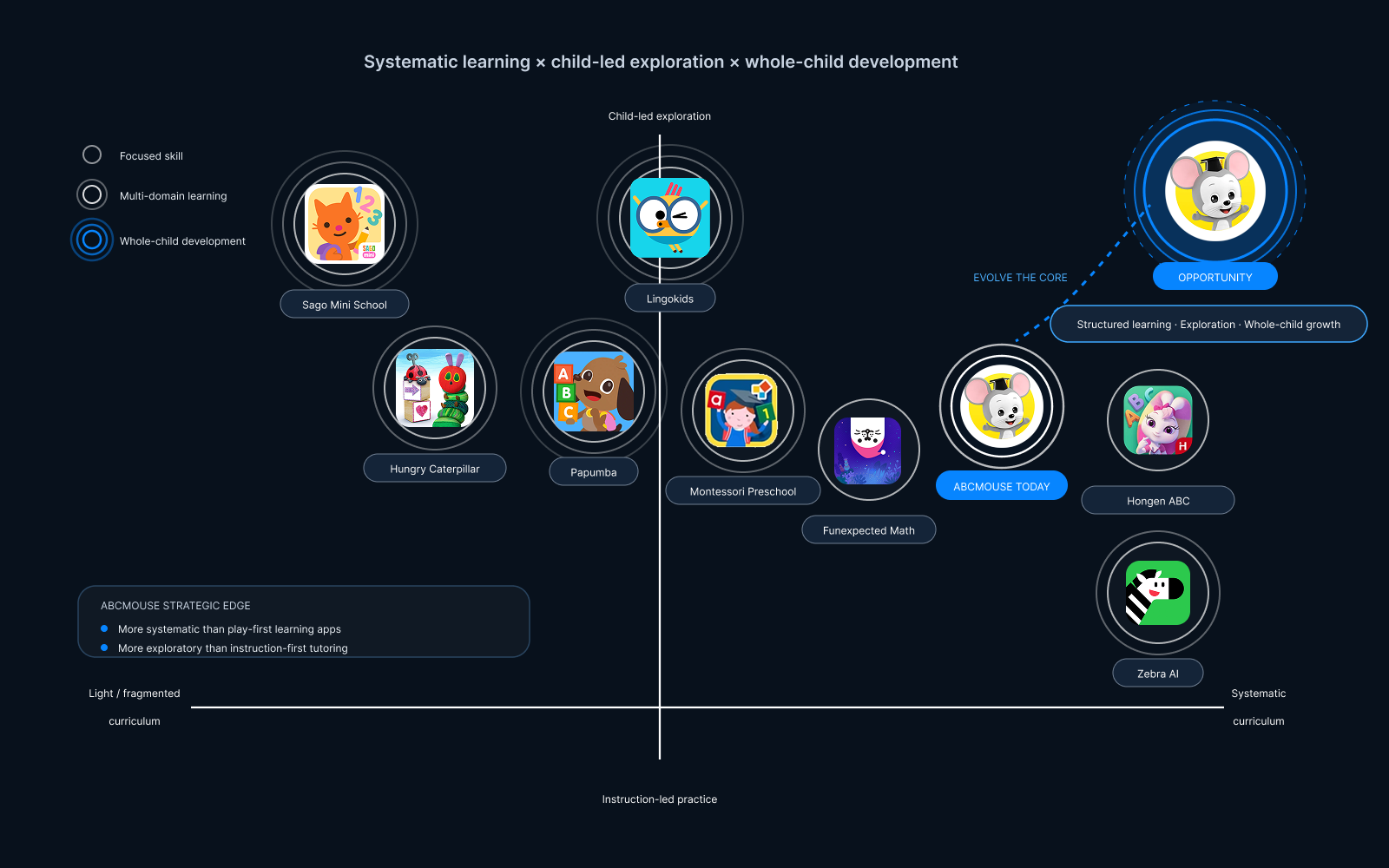
Put ABC Mouse's teaching system inside a game-led experience — more systematic than play-first apps, more engaging than tutoring-first ones.
Design · Cheaper
Cutting Cost Without Cutting the Experience
Lever 01 · Reuse the artwork
Fifteen themes, three worlds · 2020
Every theme used to need its own hand-made skin. Once the fifteen were grouped into water, desert and forest, one skin covered a whole group — the same variety on screen, a fifth of the artwork.
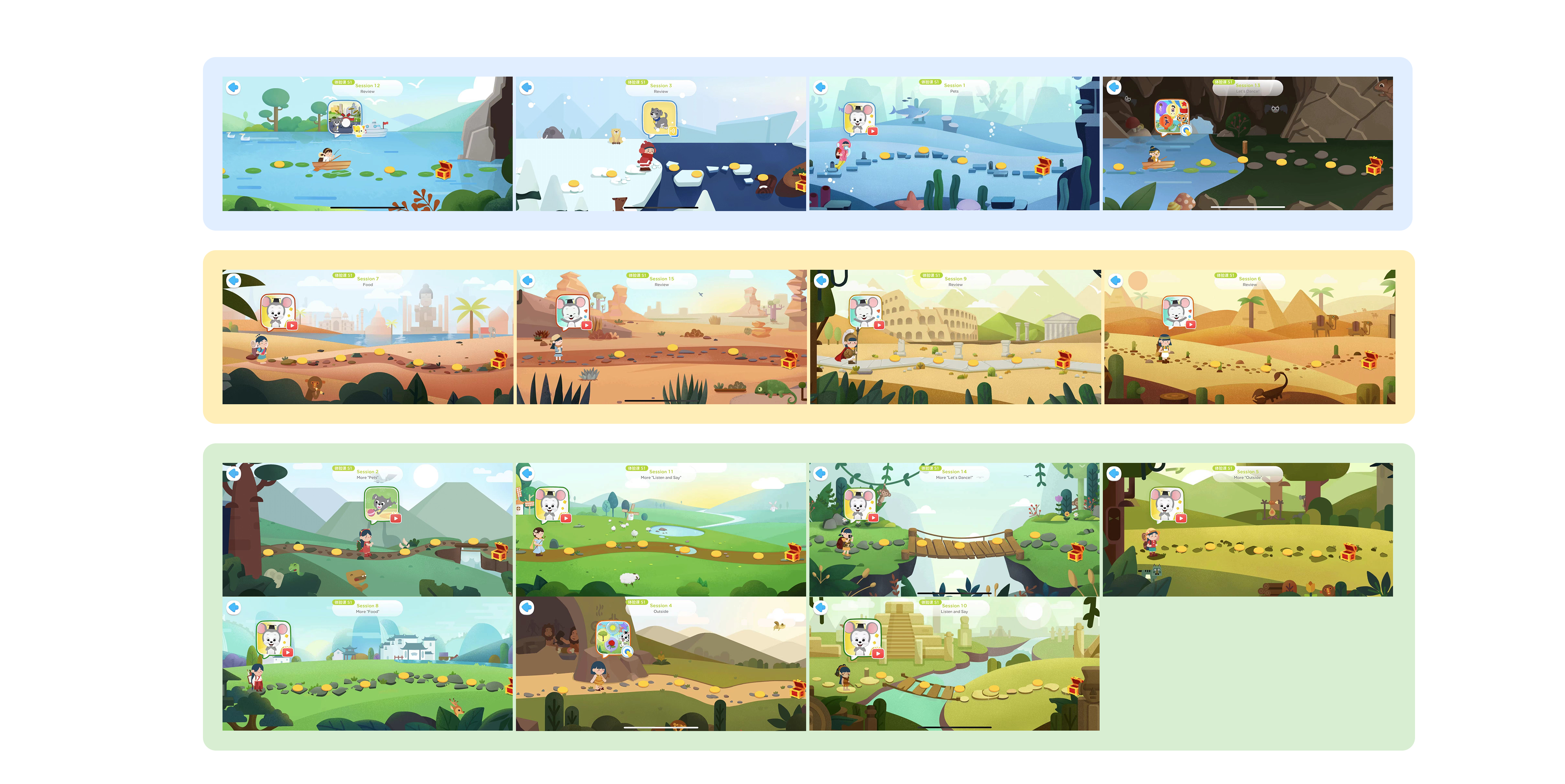
Before
15
skins for 15 themes
8 people · 60 days per skin
↓
After grouping
3
skins for 15 themes
4 people · 15 days per skin
Lever 02 · Ration the gameplay
A ratio the syllabus was planned against · 2021
Gameplay is the expensive part, so I spent it where it changes behaviour. The course runs on three types of game in a fixed ratio, so two thirds of the checkpoints ship fast and fund the games children remember.
General40%
Scene40%
Fun20%
Hover a band to see what each type is for.
Type A · General
Conventional mechanics — connecting, sorting, grid placement, judgement, listening — carrying most of the checkpoints at the lowest build cost.
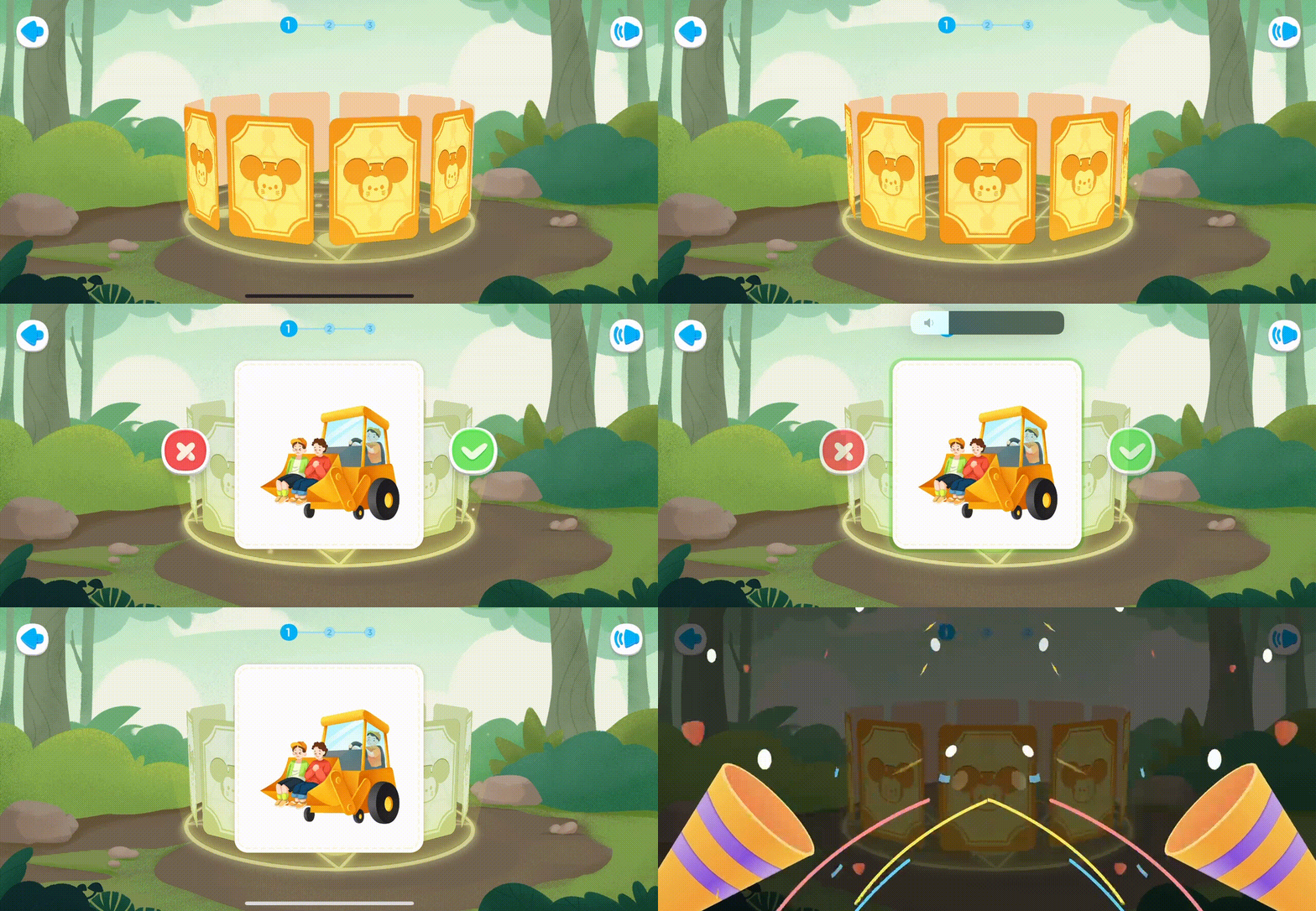
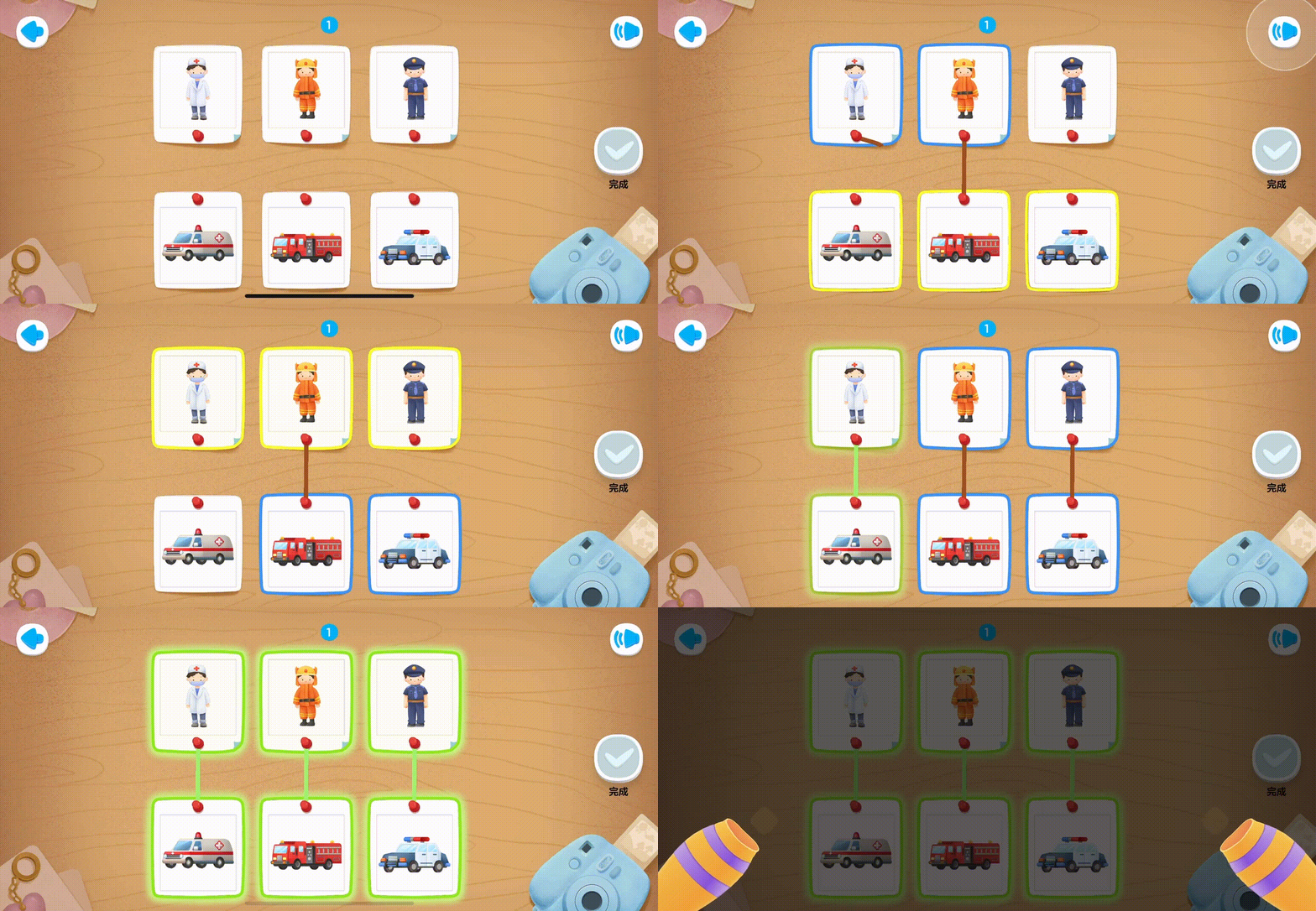
Yes or No Questions
Type B · Scene
The same checkpoint set inside a real situation, so the knowledge arrives with a reason to use it. E.g. matching a quantity to a number becomes packing a present for a friend.
Matching quantity to number
Type C · Fun
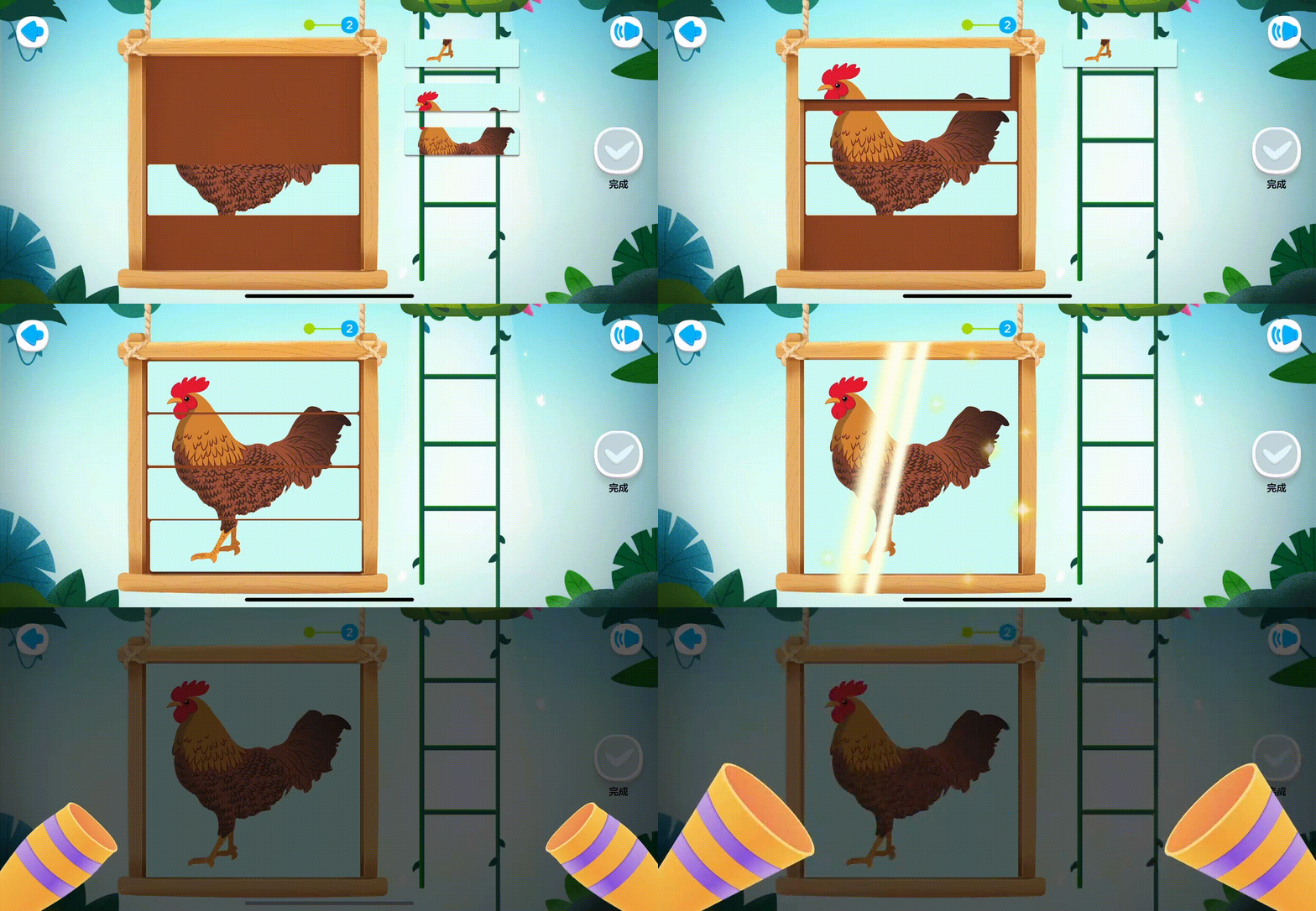
One high-craft game closes the week, built as a story children want to finish — the reward the other two types pay for. E.g. Jungle Adventure runs in four beats, each with its own knowledge point and its own kind of feedback.
01 · Shape · outline matching
Light the stones
The screen lifts out of darkness one gem at a time.
02 · Space · horizontal
The strange bushes
Every correct tap fires a different animation, so the reward stays unpredictable.
03 · Space · vertical
Go away, little monster
The first real opponent, and the first clear win.
04 · Pattern · ABA
Fix the mining cart
The gems reach the village, and the week closes on a payoff.
Results
What Each Phase Returned
Phase 1 · 2020
Optimising the games
7 of the top 10
Most-completed games in the catalogue were ones I built
72% → 98%
Completion on one of them, after the rebuild
60 → 15 days
To dress one game for fifteen themes
Phase 2 · 2021
The course, built in-house
97%
Completion on the Friday game, first of 300+
56% → 82%
Average daily lesson completion
26,890 → 45,914
Average DAU, first month after launch
27% → 41%
Children returning every day
Lightning Award
Tencent's internal award for the launch, 2021
After the launch
In 2021 the double-reduction policy closed China's after-school market, and Tencent ABC Mouse wound down. What stayed with me is the kind of work it was — consumer products with a wide scope and room to invent. I was lucky to spend those two years with this team: I enjoyed every part of it, and I learned a lot from them.
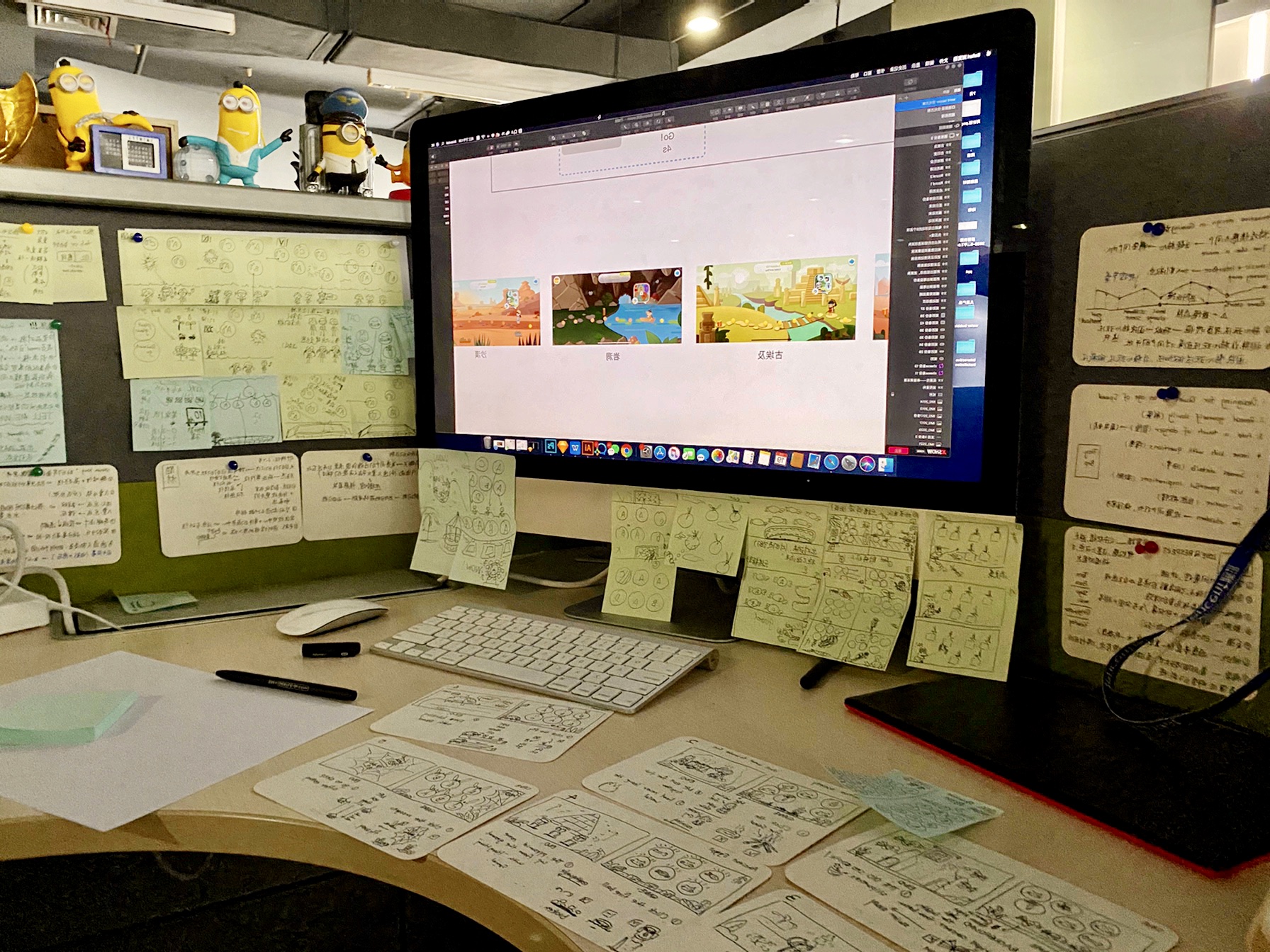
Moments
Parents renew on what their children finish. Daily lesson completion went from 56% to 82%, on a quarter of the build time.
Role
Interaction designer — research, game UX, prototypes
Time
Oct 2020 – Dec 2021 · two phases
Team
3 designers · 3 illustrators · 4 engineers · 2 PMs · 2 educators
Context
The Product and the Industry
The product
ABC Mouse China teaches three-to-eight-year-olds through a short video and the games that follow it. It started in English, passed three million users, and by 2021 covered maths reasoning, coding and Chinese — a lesson for every day of the year. Lockdown pushed school onto tablets in 2020 and made online education one of the fastest-growing categories in China.
Phase 1 · 2020
Tencent built the app. The ABC Mouse team in the US wrote the syllabus and the games inside it.Phase 2 · 2021
The Tencent team owned all of it: syllabus, games and app.My role
What I Owned, Stage by Stage
Interaction designer
Fourteen months, across the two phases below.
Phase 1 · 2020
Competitive read
→
Design direction
→
Game UX
→
Usability test
Phase 2 · 2021
New workflow
→
User research
→
Cost framework
→
Game design
→
Design QA
The problem
Where the Lesson Lost Them
54%parent satisfaction
60%child satisfaction
30families tested
Why it matters
A parent who watches a child finish the week signs up for the next course, so completion decides renewal.
What testing showed
We ran the current build with thirty families and read it against the games children already choose. They stopped in the same three places.
01
Rules to guess
A game opened without telling a child what it wanted.
02
Feedback that came late
Right or wrong, the screen often gave nothing back in time.
03
No room for a mistake
One wrong answer cleared the whole round.
Users
Four Stakeholders, Two Kinds of Player
Who has a stake
An education app answers to more people than the one holding the tablet. Every game had to satisfy four groups at once, and they pull in different directions.
Children
Something worth staying in
Parents
Proof the screen time paid off
Teaching team
The curriculum taught faithfully
Product team
Lower cost per lesson, higher sales
My seat was the trade-off between them — enough play to hold a child, enough progress for a parent to see, the curriculum intact, at a cost the team could repeat every week.
Who is playing
Child development and player-motivation research kept landing on the same split, and store-floor interviews matched it: a child under six plays to find out, a child over six plays to win — and the parent paying for both wants that screen time to teach something.
Ages 3 – 5
The explorer
Piaget · preoperational
“I want to see what happens if I click here.”
—Acts on impulse, reads pictures before words
—Wants surprise more than a score
—Loses the thread in a long session
Short rounds, a changeable scene, feedback that rewards the tap itself.
Ages 6 – 8
The achiever
Piaget · concrete operational
“I want to do well and earn the reward.”
—Plays towards a goal worth winning
—Reads points and badges as proof
—Takes a hard failure personally
Visible goals, scores that add up, and a gentle way to lose a round.
Parents
The buyer
Decides the renewal
“I want my child to learn while playing.”
—Buys learning, tolerates screen time
—Has no time to sit through the lesson
—Judges the course by what the child finishes
Progress they can see at a glance, and a session that ends on time.
Design · Better
Two Steps: Make It Work, Then Make It Chosen
Step 01 · Fix the experience
What the research asked for
The three places children stopped turned into three levers. Process answers the rules and the mistakes, interface answers what a child can see, and play answers why they keep going.
01Process
Shorter set-up, onboarding sized to the difficulty, and a help button within reach on every screen.
Before
→
After
02Interface
Five fixed layers, so a child can tell at a glance what is content and what is tappable.
Before
→
After
03Gamification
Real-life scenes and a story arc, positioned against the games children already choose.
Before
→
After
From fixes to a standard
Fixing one game teaches little about the next forty, so I audited the whole catalogue and wrote the findings into a design standard — rules for flow, layout, feedback and difficulty, each with worked examples. Every game built afterwards started from it, in both phases.
Step 02 · Define the edge
From a better experience to a stronger position
Fixing what was broken was the baseline. The harder question was where ABC Mouse could build a real advantage in a crowded market, so I mapped the leading children's learning products on three dimensions: systematic curriculum, child-led exploration, and whole-child development.
Category positioning
Put ABC Mouse's teaching system inside a game-led experience — more systematic than play-first apps, more engaging than tutoring-first ones.
Design · Cheaper
Cutting Cost Without Cutting the Experience
Lever 01 · Reuse the artwork
Fifteen themes, three worlds · 2020
Every theme used to need its own hand-made skin. Once the fifteen were grouped into water, desert and forest, one skin covered a whole group — the same variety on screen, a fifth of the artwork.
Before
15
skins for 15 themes
8 people · 60 days per skin
↓
After grouping
3
skins for 15 themes
4 people · 15 days per skin
Lever 02 · Ration the gameplay
A ratio the syllabus was planned against · 2021
Gameplay is the expensive part, so I spent it where it changes behaviour. The course runs on three types of game in a fixed ratio, so two thirds of the checkpoints ship fast and fund the games children remember.
General40%
Scene40%
Fun20%
Hover a band to see what each type is for.
Type A · General
Conventional mechanics — connecting, sorting, grid placement, judgement, listening — carrying most of the checkpoints at the lowest build cost.
Yes or No Questions
Type B · Scene
The same checkpoint set inside a real situation, so the knowledge arrives with a reason to use it. E.g. matching a quantity to a number becomes packing a present for a friend.
Matching quantity to number
Type C · Fun
One high-craft game closes the week, built as a story children want to finish — the reward the other two types pay for. E.g. Jungle Adventure runs in four beats, each with its own knowledge point and its own kind of feedback.
01 · Shape · outline matching
Light the stones
The screen lifts out of darkness one gem at a time.
02 · Space · horizontal
The strange bushes
Every correct tap fires a different animation, so the reward stays unpredictable.
03 · Space · vertical
Go away, little monster
The first real opponent, and the first clear win.
04 · Pattern · ABA
Fix the mining cart
The gems reach the village, and the week closes on a payoff.
Results
What Each Phase Returned
Phase 1 · 2020
Optimising the games
7 of the top 10
Most-completed games in the catalogue were ones I built
72% → 98%
Completion on one of them, after the rebuild
60 → 15 days
To dress one game for fifteen themes
Phase 2 · 2021
The course, built in-house
97%
Completion on the Friday game, first of 300+
56% → 82%
Average daily lesson completion
26,890 → 45,914
Average DAU, first month after launch
27% → 41%
Children returning every day
Lightning Award
Tencent's internal award for the launch, 2021
After the launch
In 2021 the double-reduction policy closed China's after-school market, and Tencent ABC Mouse wound down. What stayed with me is the kind of work it was — consumer products with a wide scope and room to invent. I was lucky to spend those two years with this team: I enjoyed every part of it, and I learned a lot from them.
Moments
Parents renew on what their children finish. Daily lesson completion went from 56% to 82%, on a quarter of the build time.
Role
Interaction designer — research, game UX, prototypes
Time
Oct 2020 – Dec 2021 · two phases
Team
3 designers · 3 illustrators · 4 engineers · 2 PMs · 2 educators
Context
The Product and the Industry
The product
ABC Mouse China teaches three-to-eight-year-olds through a short video and the games that follow it. It started in English, passed three million users, and by 2021 covered maths reasoning, coding and Chinese — a lesson for every day of the year. Lockdown pushed school onto tablets in 2020 and made online education one of the fastest-growing categories in China.
Phase 1 · 2020
Tencent built the app. The ABC Mouse team in the US wrote the syllabus and the games inside it.Phase 2 · 2021
The Tencent team owned all of it: syllabus, games and app.My role
What I Owned, Stage by Stage
Interaction designer
Fourteen months, across the two phases below.
Phase 1 · 2020
Competitive read
→
Design direction
→
Game UX
→
Usability test
Phase 2 · 2021
New workflow
→
User research
→
Cost framework
→
Game design
→
Design QA
The problem
Where the Lesson Lost Them
54%parent satisfaction
60%child satisfaction
30families tested
Why it matters
A parent who watches a child finish the week signs up for the next course, so completion decides renewal.
What testing showed
We ran the current build with thirty families and read it against the games children already choose. They stopped in the same three places.
01
Rules to guess
A game opened without telling a child what it wanted.
02
Feedback that came late
Right or wrong, the screen often gave nothing back in time.
03
No room for a mistake
One wrong answer cleared the whole round.
Users
Four Stakeholders, Two Kinds of Player
Who has a stake
An education app answers to more people than the one holding the tablet. Every game had to satisfy four groups at once, and they pull in different directions.
Children
Something worth staying in
Parents
Proof the screen time paid off
Teaching team
The curriculum taught faithfully
Product team
Lower cost per lesson, higher sales
My seat was the trade-off between them — enough play to hold a child, enough progress for a parent to see, the curriculum intact, at a cost the team could repeat every week.
Who is playing
Child development and player-motivation research kept landing on the same split, and store-floor interviews matched it: a child under six plays to find out, a child over six plays to win — and the parent paying for both wants that screen time to teach something.
Ages 3 – 5
The explorer
Piaget · preoperational
“I want to see what happens if I click here.”
—Acts on impulse, reads pictures before words
—Wants surprise more than a score
—Loses the thread in a long session
Short rounds, a changeable scene, feedback that rewards the tap itself.
Ages 6 – 8
The achiever
Piaget · concrete operational
“I want to do well and earn the reward.”
—Plays towards a goal worth winning
—Reads points and badges as proof
—Takes a hard failure personally
Visible goals, scores that add up, and a gentle way to lose a round.
Parents
The buyer
Decides the renewal
“I want my child to learn while playing.”
—Buys learning, tolerates screen time
—Has no time to sit through the lesson
—Judges the course by what the child finishes
Progress they can see at a glance, and a session that ends on time.
Design · Better
Two Steps: Make It Work, Then Make It Chosen
Step 01 · Fix the experience
What the research asked for
The three places children stopped turned into three levers. Process answers the rules and the mistakes, interface answers what a child can see, and play answers why they keep going.
01Process
Shorter set-up, onboarding sized to the difficulty, and a help button within reach on every screen.
Before
→
After
02Interface
Five fixed layers, so a child can tell at a glance what is content and what is tappable.
Before
→
After
03Gamification
Real-life scenes and a story arc, positioned against the games children already choose.
Before
→
After
From fixes to a standard
Fixing one game teaches little about the next forty, so I audited the whole catalogue and wrote the findings into a design standard — rules for flow, layout, feedback and difficulty, each with worked examples. Every game built afterwards started from it, in both phases.
Step 02 · Define the edge
From a better experience to a stronger position
Fixing what was broken was the baseline. The harder question was where ABC Mouse could build a real advantage in a crowded market, so I mapped the leading children's learning products on three dimensions: systematic curriculum, child-led exploration, and whole-child development.
Category positioning
Put ABC Mouse's teaching system inside a game-led experience — more systematic than play-first apps, more engaging than tutoring-first ones.
Design · Cheaper
Cutting Cost Without Cutting the Experience
Lever 01 · Reuse the artwork
Fifteen themes, three worlds · 2020
Every theme used to need its own hand-made skin. Once the fifteen were grouped into water, desert and forest, one skin covered a whole group — the same variety on screen, a fifth of the artwork.
Before
15
skins for 15 themes
8 people · 60 days per skin
↓
After grouping
3
skins for 15 themes
4 people · 15 days per skin
Lever 02 · Ration the gameplay
A ratio the syllabus was planned against · 2021
Gameplay is the expensive part, so I spent it where it changes behaviour. The course runs on three types of game in a fixed ratio, so two thirds of the checkpoints ship fast and fund the games children remember.
General40%
Scene40%
Fun20%
Hover a band to see what each type is for.
Type A · General
Conventional mechanics — connecting, sorting, grid placement, judgement, listening — carrying most of the checkpoints at the lowest build cost.
Yes or No Questions
Type B · Scene
The same checkpoint set inside a real situation, so the knowledge arrives with a reason to use it. E.g. matching a quantity to a number becomes packing a present for a friend.
Matching quantity to number
Type C · Fun
One high-craft game closes the week, built as a story children want to finish — the reward the other two types pay for. E.g. Jungle Adventure runs in four beats, each with its own knowledge point and its own kind of feedback.
01 · Shape · outline matching
Light the stones
The screen lifts out of darkness one gem at a time.
02 · Space · horizontal
The strange bushes
Every correct tap fires a different animation, so the reward stays unpredictable.
03 · Space · vertical
Go away, little monster
The first real opponent, and the first clear win.
04 · Pattern · ABA
Fix the mining cart
The gems reach the village, and the week closes on a payoff.
Results
What Each Phase Returned
Phase 1 · 2020
Optimising the games
7 of the top 10
Most-completed games in the catalogue were ones I built
72% → 98%
Completion on one of them, after the rebuild
60 → 15 days
To dress one game for fifteen themes
Phase 2 · 2021
The course, built in-house
97%
Completion on the Friday game, first of 300+
56% → 82%
Average daily lesson completion
26,890 → 45,914
Average DAU, first month after launch
27% → 41%
Children returning every day
Lightning Award
Tencent's internal award for the launch, 2021
After the launch
In 2021 the double-reduction policy closed China's after-school market, and Tencent ABC Mouse wound down. What stayed with me is the kind of work it was — consumer products with a wide scope and room to invent. I was lucky to spend those two years with this team: I enjoyed every part of it, and I learned a lot from them.
Moments